2012 Resolutions – The Year of Win.

  We are all sick here at Many Hands House. A rare thing for me, I have always had an immune system of iron, while Chris’ is more like a sieve. It’s a rotten time to be sick. So many friends to not be visiting, so many festivities canceled. However, I have been trying to see the silver lining in it. After weeks of constant running around, shopping, cooking, cleaning, we are forced to just be. Taking care of each other. Taking turns reading aloud (The Outsiders). And dreaming.
  So today we wrote our New Years’ resolutions. We write them every year. And we named the upcoming year as well. Last year was called “Up and Running”. This year “The Year of Win”.

1. Eat salads with every meal.
   We were doing really well with this. It was on last years list too. But when the weather cools off, we seem to forget.

2. Exercise more.
    Again, so easy when the weather is good.

3. Help Méabh communicate.
   Méabh has frequent speech therapy, and we are working on signing. It gives me hope to recall that last year we were helping her learn to walk, and now look at her. You should see her bellydance!

4. Write personal goals with the children and help them achieve them.

5. Chris will continue with grad school awesomeness.

6. I will make my midwifery and unda more thoughtful and successful.
   Both have been through big changes. But I’m not giving up. This goal is vague, I have written my own lists for both.

7. I will put more energy into homeschooling.
    It is so different to homeschool teens! And I will make sure that my focus is in line with Waldorf education.

8. I want to cultivate important friendships and end those that weigh me down.

9. And of course, the long list of home improvements:
    Organize the basement; fix the hot tub; rent a dumpster; a new arch for the prarie; more bees and trees; great gardening

10. Two reliable vehicles would be nice.

11. Blog more!

(OK – there were only 10 originally – I added the cars part just now as I was typing this.)

  You know what is most striking to me is how normal these resolutions are. And isn’t that wonderful? No “I hope my sons operations go well”, or “I hope this court case ends soon.” Just nice comfortable plans. And I bet they are similar to yours.

What are your New Years’ resolutions?

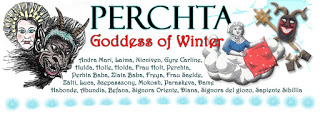
Mother Berta’s Coming To Town

by Steven Posch

Tune:  “Santa Claus Is Coming to Town
You better watch out when winter comes nigh
You better not doubt, I’m telling you why
Mother Berta’s coming to town
She carries a sack made out of skin
She dumps the toys out and stuffs the kids in
Mother Berta’s coming to town
She rides on Master Skeggi
A Goat whose back is strong
Her beard is grey and scraggly
And her tail is ten feet long!
With six or eight horns, a moustache or two
Make a mistake, she’s coming for YOU!
Mother Berta’s coming to town.
She knows with whom your sleeping
She knows with whom you wake
She knows each thought you’re thinking
So don’t THINK! For Goddess sake
So when the winds howl way up in the sky
Listen as she and Skeggi pass by
Mother Berta’s coming
Mother Berta’s coming to town!
 

Herb Walk: Yellow Dock & Dandelion Root Iron Syrup

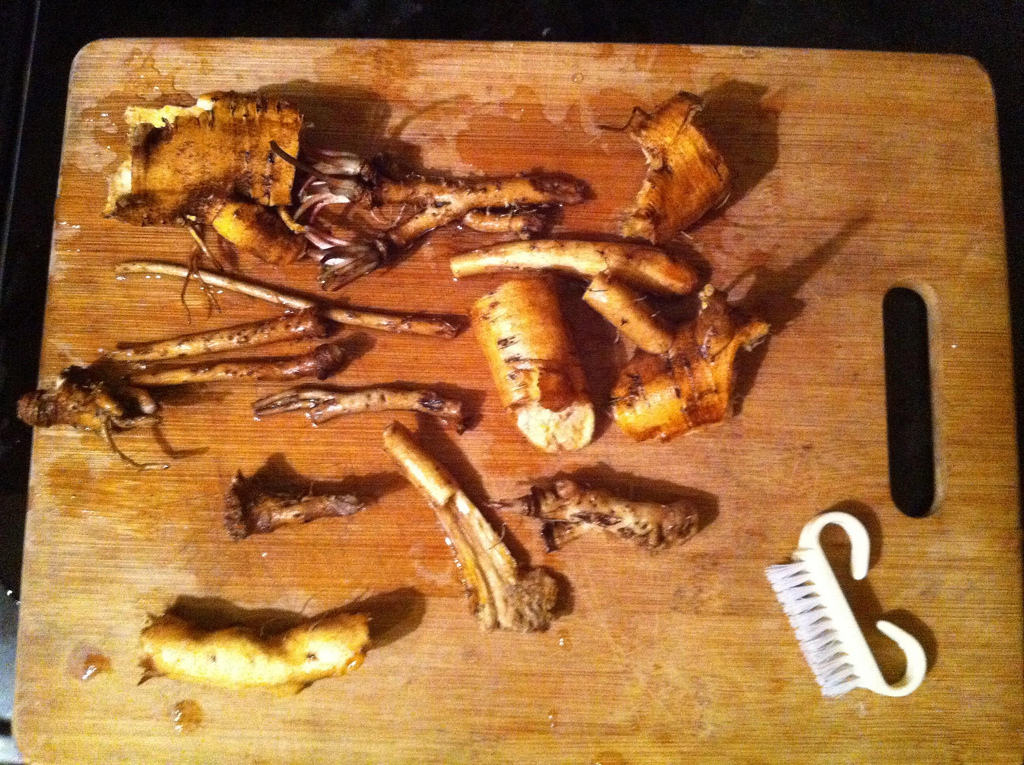
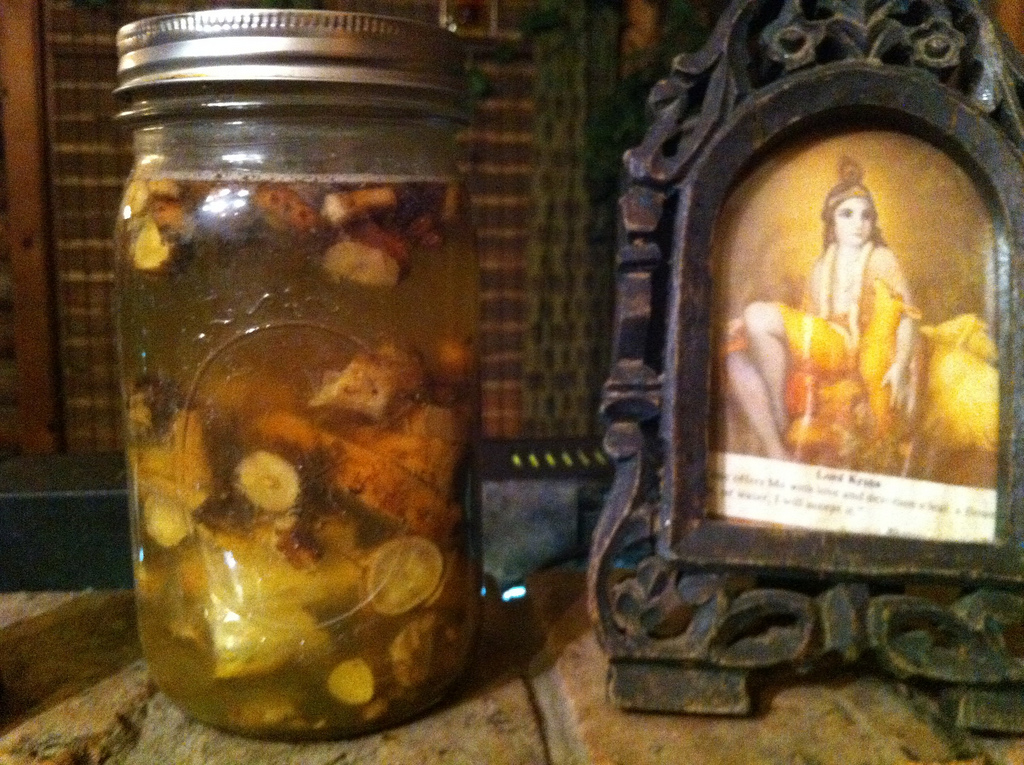
It’s the time of year for digging up roots.  And that’s what I have been doing this week. Mostly yellow dock and dandelion. I was planning to make an iron tincture, but my friend recommended this Iron Syrup recipe from herbalist Aviva Jill Romm:

1/2 ounce each dried dandelion root and dried yellow dock root
1/2 cup blackstrap molasses

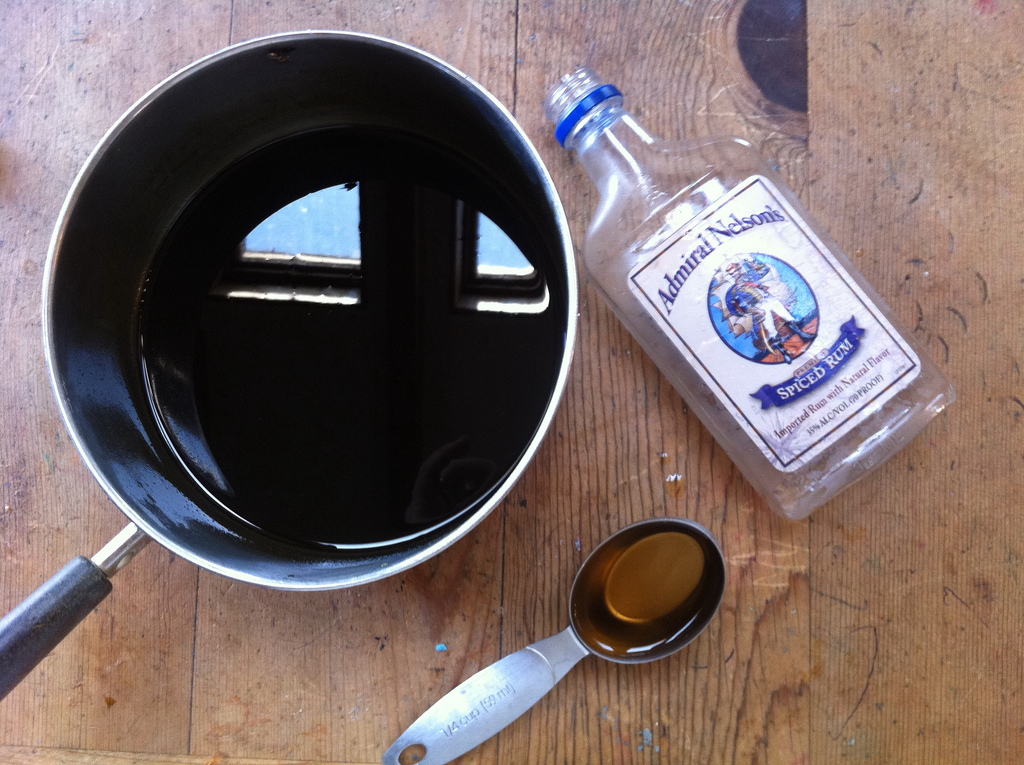
1/8 cup brandy (I used rum, because I like it and it’s what I had)

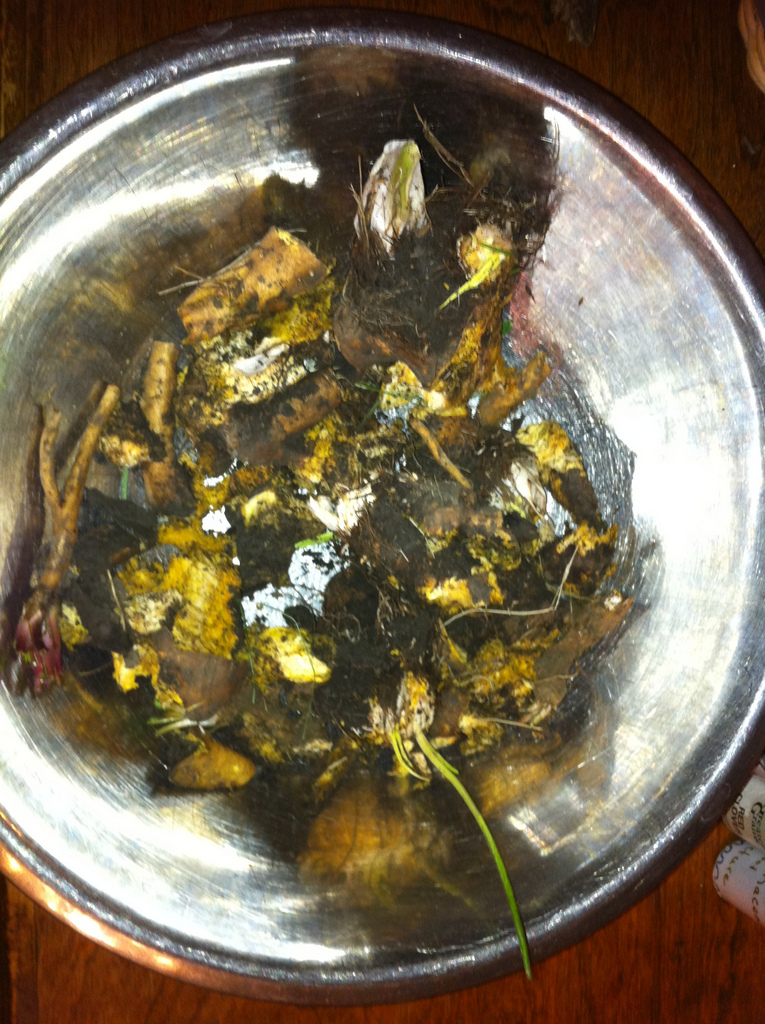
 First I gently cleaned them, then chopped them up finely.
I put the chopped roots into a quart jar.

Then I poured very hot water over them and left them sit over night.

 Next, I strained them into a pot and simmered until I was left with 1 cup of liquid infusion. This is called a decoction.

To this I added  the blackstrap molasses while still heating.
As soon as it was mixed, I removed it from the heat. Then I added rum.
 It tastes good! I am keeping it in the refrigerator where I hope it will last 3 or 4 months.
I’ve been taking a spoonfull every day, along with a Vitamin C chewable. I love it!
What herbs are you gathering? What have you been creating?

The Charge of the Goddess

Listen to the words of the Great Mother, She who of old was also called among men Artemis, Astarte, Athene, Dione, Melusine, Aphrodite, Cerridwen, Dana, Arianrhod, Isis, Bride, and by many other names.

“Whenever ye have need of any thing, once in the month, and better it be when the moon is full, then shall ye assemble in some secret place and adore the spirit of me, who am Queen of all witches.  There shall ye assemble, ye who are fain to learn all sorcery, yet have not won its deepest secrets; to these will I teach things that are yet unknown.  And ye shall be free from slavery; and as a sign that ye be really free, ye shall be naked in your rites; and ye shall dance, sing, feast, make music and love all in my praise.  For mine is the ecstacy of the spirit, and mine also is joy on earth; for my law is love unto all beings.  Keep pure your highest ideal; strive ever towards it; let naught stop you or turn you aside.  For mine is the secret door which opens upon the Land of Youth, and mine is the cup of the wine of life, and the Cauldron of Cerridwen, which is the Holy Grail of immortality.  I am the gracious Goddess, who gives the gift of joy unto the heart of man.  Upon earth, I give the knowledge of the spirit eternal; and beyond death, I give peace, and freedom, and reunion with those who have gone before.  Nor do I demand sacrifice; for behold, I am the Mother of all living, and my love is poured out upon the earth.”

Hear ye the words of the Star Goddess; she in the dust of whose feet are the hosts of heaven, and whose body encircles the universe.

 “I who am the beauty of the green earth, and the white Moon among the stars, and the mystery of the waters, and the desire of the heart of man, call unto thy soul.  Arise, and come unto me,  For I am the soul of nature, who gives life to the universe.  From me all things proceed, and unto me all things must return; and before my face, beloved of Gods and of men, let thine innermost divine self be enfolded in the rapture of the infinite.  Let my worship be within the heart that rejoiceth; for behold, all acts of love and pleasure are my rituals.  And therefore let there be beauty and strength, power and compassion, honor and humility, mirth and reverence within you.  And thou who thinkest to seek for me, know thy seeking and yearning shall avail thee not unless thou knowest the mystery; that if that which thou seekest thou findest not within thee, thou wilt never find it without thee.  For behold, I have been with thee from the beginning; and I am that which is attained at the end of desire.”

-Doreen Valiente

Samhain Giveaway!

  Sorry we’ve been such neglectful bloggers. We have been Internet free (thanks to country living and the sleazy Hughes.net) for over a month now, which isn’t all bad. But we have missed you all! And so to make it up to you, we promise to blog something every day this week, even if we have to type it all with our thumbs. And if that’s not enough, we are having a book give away!

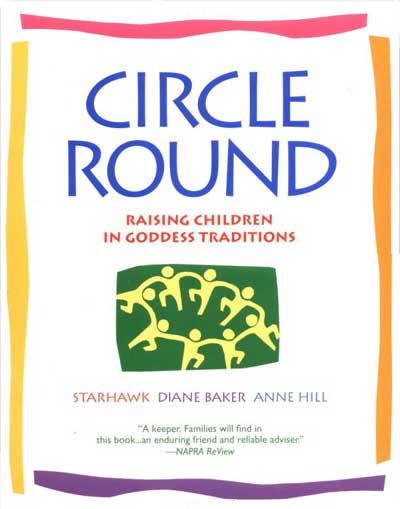
  Circle Round: Raising Children in Goddess Tradition by Starhawk, Anne Hill and Diane Baker is a treasure trove of ritual, story, seasonal activities and advice. Our family reads from it at every Sabbat and uses it often as a reference and for inspiration.

  To enter the drawing, you must do two things. Sign up to “follow us by email” (if you already have, just let us know, and thank you!) AND leave us a comment sharing your plans for Samhain.
We will randomly choose a winner, this Sunday, at 5:00.

We look forward to your comments!

Solstice Pilgrimage

     It’s 10:20 p.m.  We’ve spent all day shopping, cleaning, organizing, and packing.  This night, the night before we leave for our yearly pilgrimage to Pagan Spirit Gathering, is my traditional night to ask myself, “Why are we doing this?”  Why are we going to tent camp, for eight days, and (as is forecast) in the rain??  Why all the effort, the expenditures, the hassle?  Why on Earth would anyone spend their precious vacation time working (working!) at a gathering?
     It’s because, if I asked any of my children if they’d rather not go, or if they would rather do anything else with our time and money, they would scream in protest.  It’s because my oldest children, both out of the house, are going of their own free will, and wouldn’t miss it for the world.  It’s because, for a few days, we don’t have to be the “eccentric” family. When we arrive there, I can point to hundreds of people and say to my little ones, “They’re all pagan, like us.” 
      It’s because hundreds of pagans gather every year at the Summer Solstice and work to grow a pagan culture together; one that will hopefully take root in our children, so that they will be willing to do the work when we no longer can. 
     I might ask myself “Why?” while pounding tent stakes into the mud tomorrow, but the answer will always be the same, and will always be worth it.

The Three Traditions of Healing

   A few days ago, Susun S. Weed offered a free teleconference. I listened in, and was reminded of how much of an inspiration she has been to me. And I realized how in the past few years I have moved away from her philosophy. So I found my old copy of Healing Wise, gifted to me nearly 20 years ago by my mentors Pearl and Joann, and started to (re)read.

Healing Wise categorizes healing into three traditions:

1. The Wise Woman Tradition

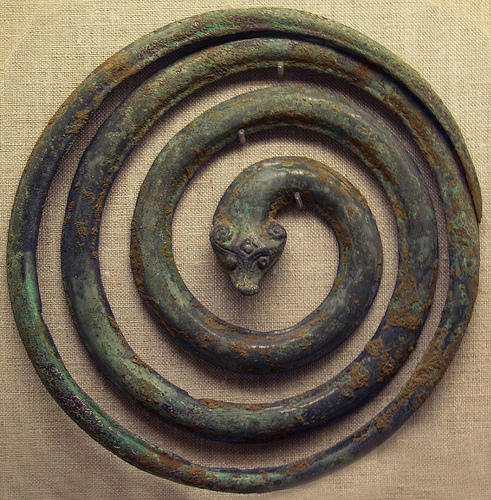
 The symbol of the wise woman tradition is the spiral. It is invisible, heals with nourishment, believes in the Goddess and blood mysteries, is heart centered and unique. The Wise Woman tradition is the tradition of Mothers. It says “Trust Yourself”.


2. The Heroic Tradition

The symbol of the heroic tradition is a circle. It has rules and punishments. It uses purging and cleansing. It is foreign and exotic. Alternative health care practitioners usually think in the Heroic tradition: the way of the savior, a circular path of rules, punishment, and purification. “Trust me”.

3. The Scientific Tradition

The symbol of the scientific tradition is the straight line. AMA-approved, legal, covered-by-insurance health care practitioners are trained to think in the Scientific tradition: walking the knife edge of keen intellect, the straight line of analytical thought, measuring and repeating. Excellent for fixing broken things. “Trust my machine”.

  The Scientific, Heroic, and Wise Woman traditions are ways of thinking, not ways of acting. Any practice, any technique, any substance can be used by a practitioner/helper in any of the three traditions. There are, for instance, herbalists and midwives and MDs in each tradition.
  The practitioner and the practice are different. The same techniques, the same herbs are seen and used differently by a person thinking in Scientific, Heroic, or Wise Woman ways. Thinking these ways does lead to a preference for certain cures. The Wise Woman helper frequently nourishes with herbs and words. The Heroic savior lays down the law to clean up your act fast. The Scientific technician is most at ease with laboratory tests and repeatable, predictable, reliable drugs. But still, the practices do not conclusively identify the practitioner as being in a particular tradition. The intent, the thought behind the technique points to the tradition: scientific fixing, heroic elimination, or wise womanly digestion and integration.
   The three traditions are not limited to the realm of healing. The Scientific, Heroic, and Wise Woman ways of thinking are found in politics, legal systems, religions, psychologies, teaching styles, economics. As the Wise Woman way becomes more clearly identified, it opens the way to an integrated, whole, sacred, peaceful global village, interactive with Gaia, mother, earth. As each discipline spins anew its wise woman thread, we reweave the web of interconnectedness with all beings.
   I became a midwife and mother in the wise woman tradition. And then through life experience and fear was led to heroic and scientific traditions. And now I am spiraling back. So this morning I applied to Susun S. Weed’s correspondence course. Which one is right for me?


And here is Susun explaining it:

She blows this interviewers heroic mind, don’t you think?

What healing methods do you use? What tradition do they belong to?

Authentic Paganisms, Part 1

     This is going to be controversial, so buckle up.

     To define “authenticity” in paganism, I mean (now bear with me here) “contextual cognitive resonance” in our practices, rituals, and traditions.  That means that our rituals, our practices, our stories, are grounded in and informed by the here and now.  That when your Paganism is seamlessly embedded with the rest of your life, then your Paganism is authentic. 
     Conversely, I mean that the more you have to screw your eyes shut and pretend, or envision yourself at Stonehenge, or ignore “Mundania”, to practice your Paganism, the more inauthentic it is, and the more difficult it will be to hand your traditions down to your children. 
     When you turn your back on the Mississippi River to face west to call “Water”, this is inauthentic
     When  you are only Pagan on coven night, or at gatherings, this is inauthentic.  (Good on you if your taking your kids along, though.)
     If we want a religion that our children will be proud to carry on, we must strive for more authenticity, at our holidays, at bedtime, for our rites of passage, in our values, our liturgy, our stories.  We must create a deeper and richer Pagan culture.  Uncle Gerald didn’t anticipate ANY of this, and it’s high time we started sinking our religious roots, right here, right now. 
    

"We Are Not Yet the Pagans We Need to Become": An Interview with Steven Posch

I met my friend and teacher, Steven Posch at a Pagan gathering in 1999.  Steven lives on the bleeding edge of Pagan theological discourse, and is one of the best-kept secrets of our religion.  His revised book, Lost Gods of the Witches, will be in print this Summer.
-Chris

When did you “become” a Pagan?
Oh, I’ve always been pagan. Your quotation marks capture the idea perfectly: all human beings are born pagan. Whenever we’re left to our own devices, to figure out who we are and how we are in the world, who we are and what we do is by definition pagan. Everyone is born pagan; anything else, one needs to be made into.
What books do you think all Pagans should read?
For years I’ve been telling people, “You can learn everything you need to know about
paganism by reading the novels of Mary Renault and Rosemary Sutcliff.” How to think
like a pagan, how to do good ritual, what paganism looks like from the inside….It’s all right there. Especially Sutcliff. What Mary Renault was to Classical Greece, Rosemary Sutcliff was to ancient Britain. Her Arthurian novel, Sword at Sunset, has the single best literary portrayal of the witches’ sabbat that I know of, recontextualized to Dark Age Britain in an utterly convincing manner. Absolutely amazing. Anyone that loves the Horned One simply must read Nigel Jackson’s Masks of
Misrule, the single best book there is about the god of the witches. And as for Herself, well, you can’t do better than Robert Graves’ The White Goddess. It’s a prophetic book,and I mean that literally. An easy book, no. But if I had to pick 13 books to take with me to the desert island White Goddess would be on the list. Near the top, in fact. As for the rest…well, there shouldn’t be a pagan bookshelf in America—oranywhere else for that matter—without books about the local flora, fauna, and birds. All real paganism is by definition local.

Do you belong to a coven? Tell us more, if you can.
Last autumn evenday (=equinox) my group Prodea celebrated its 30th anniversary. The
three founding members—Magenta Griffith, Kay Schoenwetter, and myself—are still
actively engaged; there are 8 of us altogether. After 30 years together, we’ve basically become our own Fam Trad. We started off way back when as the Brash Young Things in town that shocked the Old Guard traditionalists because we didn’t cast circles, call quarters, or believe in male-female polarity, but we still got our share of grudging respect for the quality of our work. Now we’ve become one of the Grand Old Groups of Paganistan. Ah, life and its little ironies. I have to admit, I thoroughly enjoy showing us off to visitors. After three decades together, we’ve accumulated a vast repertoire of songs, stories, rituals, traditions, foods,
customs. We’re culture-rich, something for which there’s a great hunger in the pagan
community right now. I’ve even started to see the down side of tradition. With so much history behind us, it’s always easier to go with something we’ve done before that we know will work, than to take a chance on something new that may or may not work. That doesn’t stop us, though. Now we’re the Brash Old Things.
How do you think the Paganism of the 80’s compares to paganism of the “Now”?
Sometimes I feel a little nostalgic for those days, I admit. We were completely on fire with it all; it all seemed so new and daring, so world-changing. (Myself, I still feel that way, but collectively I think we’ve come to take things largely for granted.) Back then we were convinced that we were going to transform everything, to take over the world. And lo and behold, 30-odd years on, we actually have taken over the world. The culture-wars have been won, and we’ve won them; the rightist backlash is all rear-guard action now, to be sure. They’ve already lost, and they know it.
Paganism has changed a lot since then; in many ways, we’ve finally started to
grow up, thank the Goddess. Lately the pagan intelligentsia has actually been talking
about issues of “authenticity”; I’m so proud that we’ve reached the point at which we can have an honest conversation on such a topic. Still, it sometimes annoys me that we’ve become so blasted wholesome. Last November a friend sent me Starhawk’s Samhain-for-cowans essay, all meditation and profound spiritual experiences. I thought, Ye gods, whatever happened to schmeering on the dwale, flying off to the Bald Mountain, and (can I say this in a family blog?) s***ing the Devil’s hairy c*** until the rooster crows? Now that’s what I call real witchin’.

Tell me about the Old Gods.
Well, back in the springtime of things, when Earth was a girl, she couldn’t decide which she loved better, Sun or Storm. So she took them both to husband. Twin sons to twin fathers she bore: Plant and Animal, the Green God and the Red, him we call the Horned One. They both fell in love with Moon, and when Old Hornie died (but that’s another story) they say she went down into death after him. Then when she came back she was pregnant, and that’s where our kind comes from, the witches. Oh yeah, and then there’s Sea, of course, and the Winds, and Fire—the old people say he’s the youngest of them all, and—well, that’s just the Really Big Ones. Then there’s River and Mountain and…. Witch mythology is just as rich as any of the other great mythologies: Greek, Hindu, Yoruba. Did you know that the Craft has a sacred mountain, our version of Mt. Olympos or Kailash? Did you know that the witches’ god has green eyes? (“Old Emerald Eyes” they call him.) Why is the traditional witch’s necklace made from amber and jet? Why do athames have black handles? It’s all right there in the Received Tradition: veritable treasure-trove for those willing to hunt it out.You shouldn’t have to read books to know about the gods. In fact, we all already know them; we cannot not know them. The Old Gods are the ones our ancestors used worship, way back when, and that’s true regardless of who your ancestors were or where they came from. Already long ago, the Old Gods had started to be elbowed into the background by Younger Gods—gods of war, goddesses of love—but they’ve never gone away (how could they?), and they’re still there, freely accessible to us all. To be sure, they’re the Greater Powers: they’re wild, they’re scary, and they’ll never be tamed, the witches have held to them all along; that’s one reason why people feared us even back in pagan times. Wild witches, wild gods: baby, lemme at ‘em. The Old Ones hold us all together across tribes, across traditions. The Younger
Gods by their very nature vary from tradition to tradition, but the Old Gods we all have in common. Hey, the Old Gods are so all-pervasive that even the monotheists worship one: Sky. A god you can’t see: go figure.

How do you think Pagan families fit in to the current Pagan culture?
Things sure have changed for the better since the old days, when there were no pagan
families and nobody raised their kids pagan. Whatever were we thinking? That said, there sure is a lot of room for improvement. The “Sunday school” model of teaching paganism doesn’t work. The best way to learn this stuff is by immersion. One doesn’t learn the Old Stuff by being lectured at in class; one learns by watching and asking questions, by participating and by taking it for granted until you meet someone else that does things differently. I hate condescending, dumbed-down “kid’s rituals.” We should be bringing the kids to the grown-up rituals. So what if they don’t understand everything they see? Maybe it will spark something in them, get them asking questions. And if our rituals are so dull that the kids are bored, then the grown-ups are probably bored, too. And if the grown-ups are bored, then the gods are probably bored too. And that means we need to rethink how we’re doing ritual and start doing something better. We need the kids to keep us honest. If we really love the Old Religions and want them to continue after us, we’ve got to engage the kids. And the very best way we can do that is to make for ourselves a pagan culture that covers all of life, and that’s so vibrant, so engaging, and so desirable that the kids will come to it and take ownership of their own accord.

Any tips for Pagan parents?
You gotta live it yourself. Pagan can’t just be what you do in circle at full Moon; it needs to be full time, 24/7/365, because you can’t gull kids. They’ll see the gap between what you say and what you do every time. Authentic paganism isn’t just a religion; it’s a culture. Kids need to grow up with the songs, the stories, the foods, the holidays. All this gives texture, richness, a sense of identity: just what everyone in America longs for. To give it to our kids, we have to have it ourselves, and if we don’t have it, it’s time to talk to someone that does. As they say, there’s no rest for the Wicca.

What do you think is the function of Pagan festivals?
Festivals are the seedbeds of the pagan cultures of the future. They’re our opportunity here-and-now to live full-time in pagan culture, and we need to take the lessons that we learn there and bring them back home with us to help us build our own local communities. On a historical note, I want to add that pagan festivals got their start right here in the Midwest. Let’s face it, America is the center of world Pagandom, and the center of American Pagandom is right here in the Midwest. The Pagan Heartland: that’s us.
What do you see in the Pagan future?
Hallmark sabbat cards. PNN. (Nobody said it was all going to be good.) In the cities,
pagan neighborhoods. Public shrines. We’re going to have holy places again, just like
they did in the Old Days. (If you don’t know where your local holy places are, it’s time to start looking.) We’re going to start raising standing stones again. I contend that pagans are actually an emergent ethnic group in the US. We won’t be a majority for the foreseeable future, but we’ll continue to exercise cultural clout in excess of our numbers because what we bring to the conversation is so different, so compelling, and so self- authenticating.
The past was pagan. Modern human beings have been around for how long? 250,000 years or so? From available evidence, we’ve been pagan that whole time. By comparison, anything else is the merest blip. Folks, the future is pagan, and the paganisms of the future are going to be based on what we do right now. That’s why we’ve got to work our butts off to get it right, and why only the very best that we can achieve is good enough. As Socrates said: If you want to understand the gods, look at
excellence.
Steven Posch is the keeper of the Minnesota Ooser, and one of the Twin Cities’ foremost men-in-black.