The Rigs O’ Barley

by Robert Burns
(song by Paul Giovanni)
It was upon a Lammas night,
When corn rigs are bonnie,
Beneath the moon’s unclouded light,
I held away to Annie:
The time flew by wi’ tentless heed
Till ‘tween the late and early,
Wi’ sma’ persuasion, she agreed
To see me thro’ the barley.
Corn rigs, an’ barley rigs,
An’ corn rigs are bonnie:
I’ll ne’er forget that happy night,
Amang the rigs wi’ Annie.


The sky was blue, the wind was still,
The moon was shining clearly:
I set her down, wi’ right good will,
Amang the rigs o’ barley:
I ken’t her heart was a’ my ain:
I lov’d her most sincerely;
I kiss’d her owre and owre again,
Amang the rigs o’ barley.
Corn rigs…

I lock’d her in my fond embrace;
Her heart was beating rarely:
My blessings on that happy place,
Amang the rigs o’ barley!
But by the moon and stars so bright,
That shone that hour so clearly!
She aye shall bless that happy night,
Amang the rigs o’ barley.
Corn rigs…

I ha’e been blythe wi’ comrades dear;
I ha’e been merry drinkin’;
I ha’e been joyfu’ gatherin’ gear;
I ha’e been happy thinkin’:
But a’ the pleasures e’er I saw,
Tho’ three times doubled fairly,
That happy night was worth then a’,
Amang the rigs o’ barley.
Corn rigs…

Bump Off Day!


When Archer was around two years old, He developed a “bump” under his jaw. I figured it was just how he looked. People started to ask questions. Strangers in the store. Concerned relatives. I figured, if it’s not bothering him, we’ll leave it be.
 Then one night he wasn’t feeling well. His bump was much bigger than before. And blue. I was scared. So off to the emergency room we went. It was Christmas Eve and the hospital staff was definitely the “B”  team. They too, were scared. Lots of MRIs and exams! Eventually it was decided that he was in no danger that night, and it was off to a specialist the next day.
  The specialist was great, but also pretty stumped. He thought it was perhaps a lymphatic malformation. Lots more imaging done. He decided that we could let it be for now, just continue getting frequent check ups.
 During this time I did a ton of research. My friends at The Farm Midwifery Center helped me with internet searches. Archer used homeopathic remedies and received chiropractic care. His bump grew slowly, but sometimes would swell or hurt. It caused Archer to vomit sometimes and it was difficult for him to breathe in his sleep unless he was sitting up.
 A friend who worked at The University of Iowa told us about their research in Vascular Malformations. We set up an appointment for Archer. We were  very excited to learn what was going on.
  Now I love the UofI. They saved my daughters life! But, with Archer it was a mess of misdiagnosis, lost x-rays, and poor prognosis. They said they would operate, but there was a good chance his facial nerves would be damaged.
Around this same time I learned of The Vascular Malformation Clinic at Children’s Hospital in Boston. I called, they were brilliant! I sent them Archer’s images, had phone meetings, and they were confident they could help Archer.
And so began the long journey to have Archer’s bump removed. Yearly trips to Boston Children’s Hospital, travel, insurance woes, time off work, research, worry, excitement! And TODAY he is having what we hope is his final procedure! I am so happy and nervous all at once!

Here is an overview of what Archer’s “bump” is:

What is a venous malformation (VM)?

VM is a bluish lesion on the skin, mucous membrane, or in any organ system. It is composed of abnormally formed, dilated veins. The walls of these channels are unusually thin because of a relative lack of smooth muscle cells. VMs are the most common type of symptomatic vascular malformation. The older, incorrectly used term for VM is cavernous hemangioma.

What causes VMs?

The deficiency of smooth muscle lining cells may be critical. DNA studies from rare families with multiple VMs have shown mutations (alterations) in genes responsible for the formation of and communication between the endothelial lining cells and the smooth muscle cells in the walls. No known food, medication, or activity during pregnancy can cause a VM.

When do VMs occur?

VMs are usually present at birth, but are not always seen. They can appear in childhood, adolescence, or adulthood.

Where do VMs occur?

They are most common in the skin, but can be present in other tissues, e.g. muscle or bone, or in any organ, e.g. the bowel, liver, or spleen. The estimated incidence of VMs of the brain in the general population is 0.5%.

What do VMs look like?

They are dark blue and are usually soft, although they can become firm if a clot forms in the VM. The appearance of VMs ranges from small dots to large lesions involving skin and muscle. They can be single or multiple.

When should a vascular anomalies specialist be consulted?

A specialist should be contacted whenever a VM becomes symptomatic (is in a critical location, such as around the eye, on the face, or in the neck, or if it involves the hands, feet, or an internal organ, such as the gastrointestinal tract, liver, or brain).

What are the possible complications of VMs?

VMs tend to grow proportionately–in other words, they grow at the same rate as the child. They also can suddenly expand as the result of clot formation within the VM. They also can enlarge as the result of injury or during puberty and pregnancy, or if a woman is taking birth-control pills. Large VMs can be associated with a clotting abnormality. A VM within the brain or gastrointestinal tract can suddenly bleed.

How are VMs diagnosed?

The history and physical findings usually provide sufficient clues as to the diagnosis. The bluish appearance is typical. VMs also tend to be painful, particularly in the morning upon arising, or if they are struck. VMs often swell if the affected region is made dependent (lowered below the level of the heart). VMs in the head/neck region enlarge when the patient tries to force air from the lungs with the vocal cords held closed (Valsalva maneuver). The diagnosis can be made or confirmed by ultrasonography, magnetic resonance imaging (MRI), or computed tomography (CT). VMs of the gastrointestinal tract are often best seen by looking in the mouth or the rectum with a telescope-like device called an endoscope (endoscopy).

How are VMs treated?

Only very small VMs can be treated with a laser. The two main treatment strategies are sclerotherapy (injection of an irritating solution to shrink the abnormal veins) and surgical removal (either total or subtotal). Sclerotherapy for all but small lesions should be done by an experienced interventional radiologist.

What research is being done on VMs?

Mutations in several genes that cause VMs have been discovered by DNA analysis of families that have multiple lesions. These discoveries will enable investigators to better understand how VMs occur and may lead to the development of new treatments.

What are the types of VM?

Glomovenous malformation (GVM) is the most familiar form of VM. The cutaneous (skin) lesions contain glomus cells in the walls of the abnormal channels. Glomus cells are abnormally-formed smooth muscle cells believed to function in the normal regulation of blood flow. From studying families with these lesions, the gene is located on chromosome 1p, it is called glomulin. The lesions are often multiple and can occur in any part of the body as blue-purple, often painful, nodules or large plaques.
Cerebral-cavernous malfomration (CCM) is a familial disorder characterized by the formation of multiple VMs in the brain. These lesions often bleed and expand. About 10% of patients with this disorder develop skin VMs. The causative gene is KRITI.

Blue rubber bleb nevus syndrome is characterized by of multiple VMs of the skin and internal organs. The rubbery, bluish lesions vary in size from a pinhead to many centimeters in diameter. They can occur on the trunk and limbs, as well as within the gastrointestinal tract, where they may cause bleeding and anemia. The lesions tend to get larger and more numerous over time and may be painful. The intestinal lesions can cause lifelong bleeding, intermittent abdominal pain, or sudden bowel blockage. They are difficult to confirm by computed tomography (CT) or magnetic resonance imaging (MRI), and may require endoscopy and nuclear medicine imaging for diagnosis. The intestinal lesions, of which there may be hundreds, can be successfully treated by an interdisciplinary endoscopic and surgical approach in which as many lesions as possible are removed.

  If you are reading this blog because you have a child with VM or LM, know that there is hope! Here are some links that really helped me:

http://www.childrenshospital.org/az/Site1830/mainpageS1830P0.html

http://health.groups.yahoo.com/group/lmsupport/

http://www.staycalm.org/

http://www.liamsland.org/

http://www.birthmark.org/contact.php

When Archer gets home, we are having a “bump off”  party! We cannot wait!
Apples and Toasters

   When you compare Christianity to the Pagan religions, you’re not comparing apples to apples, or even apples to oranges.  You’re comparing apples to toasters.

-The pagan religions are not religions “of the book”, like the Abrahamic religions (which are relative newcomers to the historical scene). In the modern pagan religions, personal experience equals or trumps any authoritative texts.

-There are no necessary statements of belief in the pagan religions.  Hel, you don’t have to believe in anything to be pagan (just like it was for our ancestors). 

-This world is sacred to pagans, and not something to necessarily transcended.  Many pagans believe they’re coming back here to live again!

-Since the Greek pagan philosophers, pagan ethics has been an exploration of how to best act in different situations, and not the creation of absolute laws of ethical behavior.

-Et cetera.

To my well-meaning Pagan brothers and sisters who reach out to Christians by citing commonalities, I say this:  Paganism won’t ever, ever measure up to Christian standards, no matter how hard you try.  Most importantly, Christianity isn’t the supreme religion of world, by which all other religions should be measured.  Don’t fall into that trap.  Christianity doesn’t corner the market on legitimacy, or morality, or anything.  And it sure doesn’t measure up to Pagan standards.  Should we strive for peaceful dialogue and coexistence with those of other religions? Of course!  It doesn’t mean licking the boots of every fundamentalist who screams devil because we don’t bow down to their god. 

We should be too busy figuring out what this current iteration of Paganism is; we should be creating our own culture.  We don’t have time to pick on Christians, but we also don’t have time to stand around and hope they notice us in the hallway. 

Christopher   Frebur

Weed Walking!

My good friend and bellydance teacher Michele Donner Ramsey wrote this blog post after a visit. Check out her blog Learning to Live – Living to Learn. My notes are in purple.

Your browser may not support display of this image.  

  I visited my most gorgeous friend Melanie the other day. We share many loves and the one I plan to explore in great detail is herbalism. I have signed up for TWO herbalism courses recently and right now I am focusing on identifying common local herbs, especially the so-called weeds! Melanie is a fabulous resource for this! She identified a few weeds in my own yard (Yellow Dock and Lambs Quarters) to my delight. I just had to go on a weed walk in Melanie’s yard while there!
We identified so many things that my poor brain did not retain it all. I should have taken my notebook with me on the walk so that I could write the names down as I took pictures… lesson learned. But I do now remember a few of them (borrowing a few books for identification helped!)

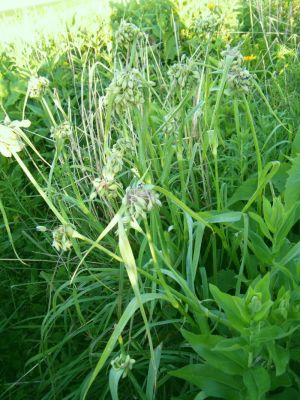
Thimbleweed
Your browser may not support display of this image.
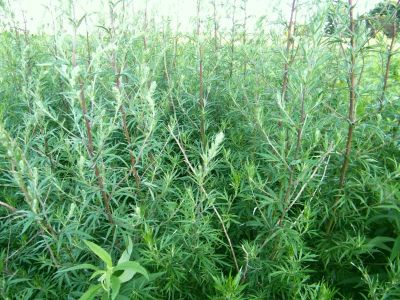
Mugwort – This one made it into one of my very first jars to make a tincture. I was supposed to make a dream pillow with it, but I forgot and tinctured it instead. Ha! I also tinctured some wormwood.
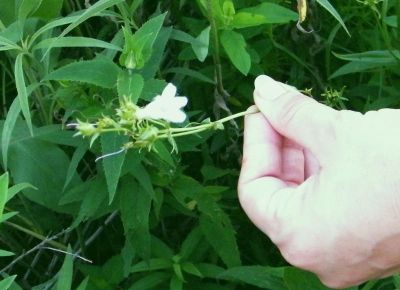
Wild Rose – this one I could identify but I snapped the picture because of those odd globes attached to the leaves, I wanted to know what those were. (galls from a gall wasp)
Foxglove! the picture does not do it justice.
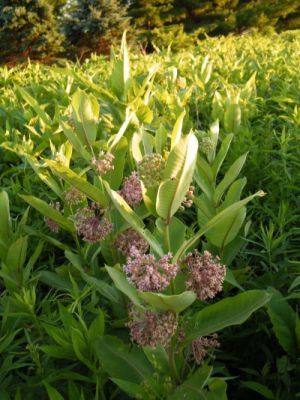
Prairie Milkweed!
 
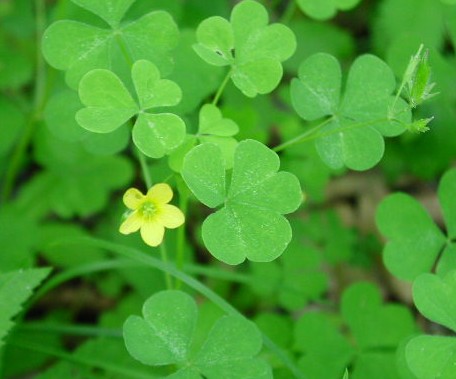
We tentatively ID’d this as trefoil. It seemed smaller than it was described as the book, but all other attributes matched up.
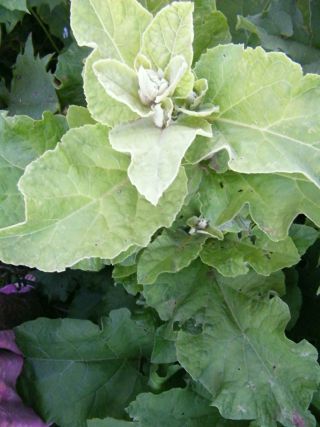
Burdock – now we’re trying to decide if it’s first year growth or second year.

And here are some that I forgot their names, so Melanie will have to fill in the blanks for me!
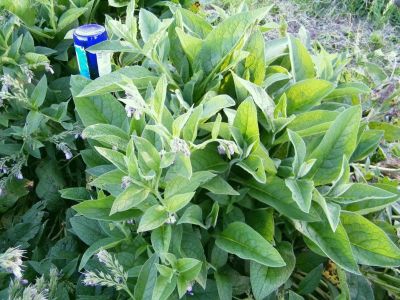
Comfrey!
Spiderwort
Your browser may not support display of this image.
Melanie said the flowers were lovely but they close in the evening.
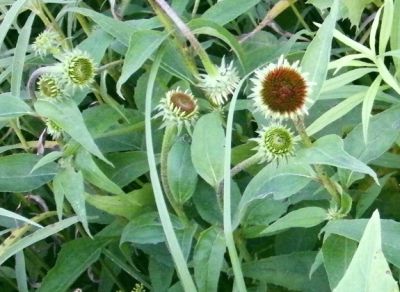
Echinacea – getting ready to flower 
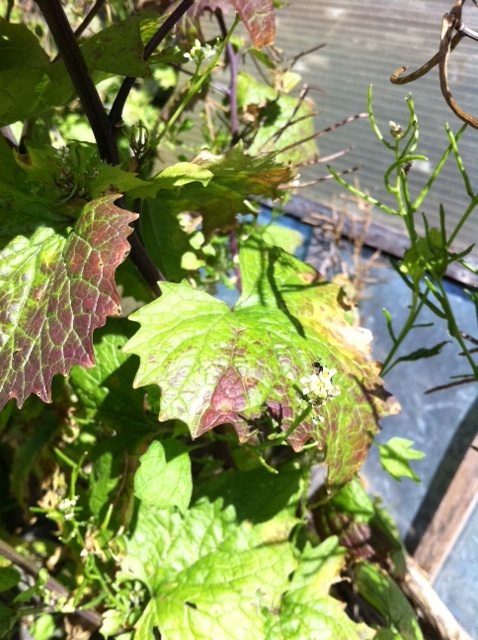
 I found this new one right outside the front door. I tasted the leaves. Nothing. I tasted the seed pods. Yum! Wild mustard! 

We saw a lot more, but I did not take pictures of everything especially since I knew most of them.  We saw yellow dock, lambs quarters, red clover, thistle, nettles, shepherds purse and yellow wood sorrell. (Don’t forget the plantain! She’s an abundant treasure!) I knew fleabane, which I think was one that Melanie hadn’t been familiar with. And she had a mint she did not know, which I was sure was catnip (an easy verification with my cats took care of that ID).
I had the best time! I can’t wait to do it again, this time perhaps more prepared (I’m thinking of pressing samples!)

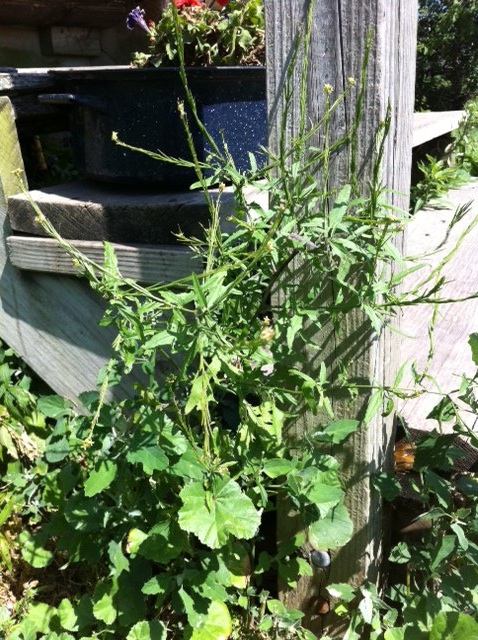
   OK all you Green Witches, here’s a reader challenge. What the cuss is this? It grows near the artemesia on the south side of the house. It has small white flowers. 

Your browser may not support display of this image. 

What’s growing in your yard? I look forward to your responses. Thanks again Michele!

Blog Giveaway #2!!

Okay, here’s how it goes:  Answer the question, and a randomly chosen participant will win Steven Posch’s wonderful CD of stories: Radio Paganistan. The winner will be chosen at 5pm on Sunday.

 Here’s the question: 

If you had the time, what pagan practice would you take up?  What have you always been meaning to do?  Sunset offerings?  Observing every full moon? Meditation?  What?

That’s it.  We can’t wait to see what you come up with!

-Melanie and Chris

Solstice Pilgrimage

     It’s 10:20 p.m.  We’ve spent all day shopping, cleaning, organizing, and packing.  This night, the night before we leave for our yearly pilgrimage to Pagan Spirit Gathering, is my traditional night to ask myself, “Why are we doing this?”  Why are we going to tent camp, for eight days, and (as is forecast) in the rain??  Why all the effort, the expenditures, the hassle?  Why on Earth would anyone spend their precious vacation time working (working!) at a gathering?
     It’s because, if I asked any of my children if they’d rather not go, or if they would rather do anything else with our time and money, they would scream in protest.  It’s because my oldest children, both out of the house, are going of their own free will, and wouldn’t miss it for the world.  It’s because, for a few days, we don’t have to be the “eccentric” family. When we arrive there, I can point to hundreds of people and say to my little ones, “They’re all pagan, like us.” 
      It’s because hundreds of pagans gather every year at the Summer Solstice and work to grow a pagan culture together; one that will hopefully take root in our children, so that they will be willing to do the work when we no longer can. 
     I might ask myself “Why?” while pounding tent stakes into the mud tomorrow, but the answer will always be the same, and will always be worth it.

Herb Walk: Yellow Wood Sorrell

  I know you all already know this herb, but I was so surprised and delighted by her appearance today that I needed to mention her. I was weeding the garden, contemplating a blog post on plantain (soon…..) and there she was, conveniently next to the chive patch.
  
  Here is what to do with wood sorrell: Take your lover by the hand. Fill your own hand with wood sorrell leaves and flowers – the unopened buds are the tastiest – and some chive tips. Sit in the garden together eating nature’s salad and rejoice that it is no longer winter.

Need more info? http://www.squidoo.com/oxalis

Our response to "The Pagan Household’"

     Yesterday, Melanie and I responded to this post on “The Pagan Household”.  Our response did not show up on the blog.  If it was removed, we completely respect that decision.  However, we think this issue is very important, and so we have decided to post our response here on our blog. 
      Pagans are famous for their internet “flame wars”.  This is actually a product of monotheist thinking.  We can disagree with each other, we can debate ideas, we can criticize each other without becoming enemies.  It’s not an “all or nothing” dynamic.  Also, our polytheistic heritage teaches us that there are always more than one, or even two, ways of thinking about things.  With that in mind, please comment if you have any thoughts about this subject.  We have to start having these difficult conversations if we’re ever going to learn from each other!

     I’m am so sorry that your life situation is  difficult. However, I do
not agree with your advice. In fact I think it is bad advice.  Our
Goddess is not the same as the Christian god, and I think it is
important to teach our children that. Can you imagine a Mormon or a
Jew telling their children to keep their religion a secret? Is it
mentally healthy to lie to your children about God? And where does
that end? Heaven? Sin? Baptism? How do you answer important questions
like “Where do people go when they die?”
 If Pagans want to be treated like a “real religion”, they should
start acting like they practice a real religion. My children have
never come home professing to be Christians. I cannot even fathom it!
A child who comes home professing to be Christian has been given no
roots in Paganism. Paganism needs to be a culture that a family lives,
from the day the child is born. Celebrate the holidays, go to
festivals, find people of like mind.  Your child would never want to
be Christian if they enjoyed being Pagan!
    What would Paganism look like if it were completely unfettered by
society-at-large?  What if no one were afraid to call themselves
Pagan?  What would that look like? Only when we can hold that vision
clearly in our minds, will we have the courage to fight for it.

Tell the in-laws you’re pagan, already!

      I’m going to be blunt: pagan parents, start rearing your children as pagans.  Stop hiding, stop treating our religions as dirty secrets so as not to upset the in-laws. It’s one thing to hide your paganism from your parents when it’s just you; it’s inexcusable to make your kid an accomplice.
     Stop hiding behind the excuse that you want to “expose your child to many paths” or “to let them choose their own paths”.  You can expose them to many paths, and still raise them as pagans.  Don’t be fooled; no one grows up in a spiritual vacuum.  If you do not provide a pagan worldview, another worldview will be provided for them by the culture-at-large, and you may not like it.  They may move on when they’re older, but at least they have pagan roots.  Give them a spiritual context to start from, so that they CAN evaluate other paths, instead of leaving them to drift along aimlessly. 
     We are just beginning, as pagan people, to rebuild what we have lost.  Together, we can create the songs, the customs, the art, the poetry, the dances, the philosophy we need to make our many traditions into a thriving religious culture.
   
     So, go on, just tell them.  
   
     -Chris


Herb Walk: Shepherd’s Purse

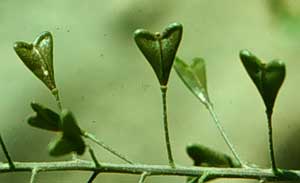
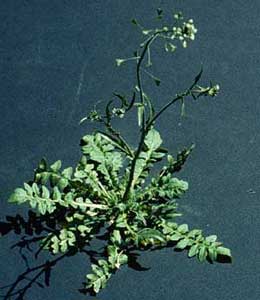
  Time for another weed walk! Let’s meet Shepherd’s Purse Capsella bursa-pastoris (a.k.a. Witches’ pouch or Mother heart):

Shepherd’s Purse grows wild all around my house. I bet it grows all around yours too. Sneaking up between sidewalk cracks. In the swampy wet places.

  Some folks eat its peppery seeds in salad, but I regard Shepherd’s Purse as MEDICINE. Please do not take this herb if you are pregnant!!!!! If I want a peppery salad, I prefer Shepherd’s Purse’s brother plant, Poor Man’s Pepper, which usually grows nearby.
  Shepherd’s Purse is used to control bleeding. It is a vasoconstrictor. The fresh tea is used for heavy periods, the tincture for helping post miscarriage and childbirth. The tea can be used as a poultice on a bleeding wound. Soak cotton balls in it and place them in your nostrils for a bloody nose.

SHEPHERD’S PURSE / YARROW TEA for heavy periods
  • 2 parts nettle,
  • 1 part shepherd’s purse leaf/flower,
  • 1/4 yarrow leaf/flower.

Use four to six tablespoons of herbs per quart of water. Place herbs in quart jar and cover with boiling water. Cover tightly and allow to infuse for at least twenty minutes (though the longer the better). Strain.

 
FLOOD GATES – TEA
  • 2 parts shepherd’s purse leaf,
  • 1 part nettle leaf,
  • 1 part yarrow flowers/leaf,
  • 2 parts white oak bark.

Use four to six tablespoons of herb mixture per quart of water. Place herbs in cold water and slowly heat to a simmer. Simmer over low heat for twenty minutes. Strain.


  In my midwifery practice, I use a tincture of Shepherd’s Purse for post partum bleeding after the delivery of the placenta. I had been purchasing the tincture for quite a few years, paying near $12.00 for a 1 ounce bottle. Little did I know, making it is easy and cheap! the herb is free and local, and I get a big bottle of vodka out of the deal!

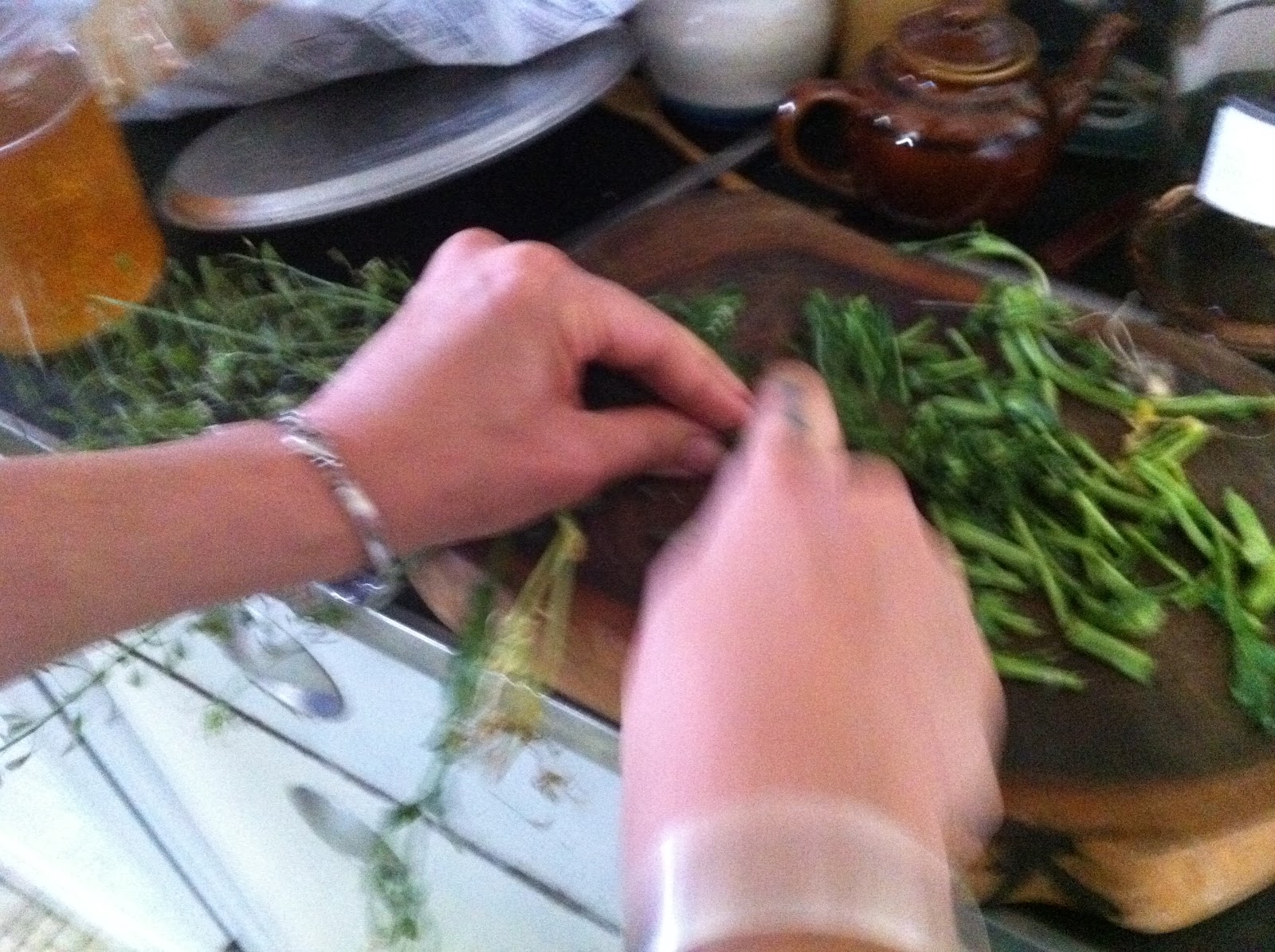
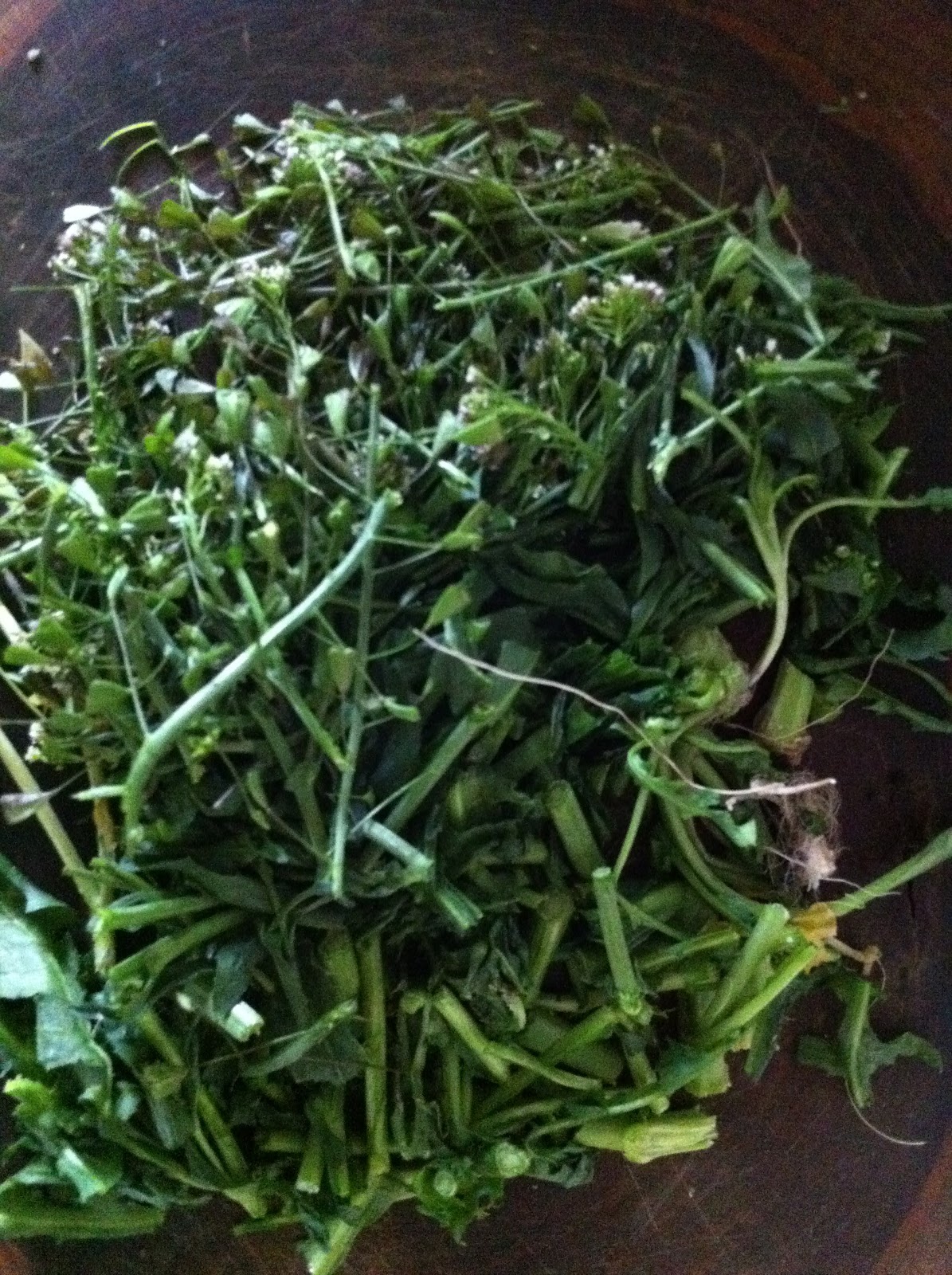
 To make a tincture, (these instructions will work for ANY herbal tincture, not just Shepherd’s Purse) gather up a lot of fresh Shepherd’s Purse. (Add equal parts yarrow for a menstruation tincture) The entire plant. Cut it up into little pieces:

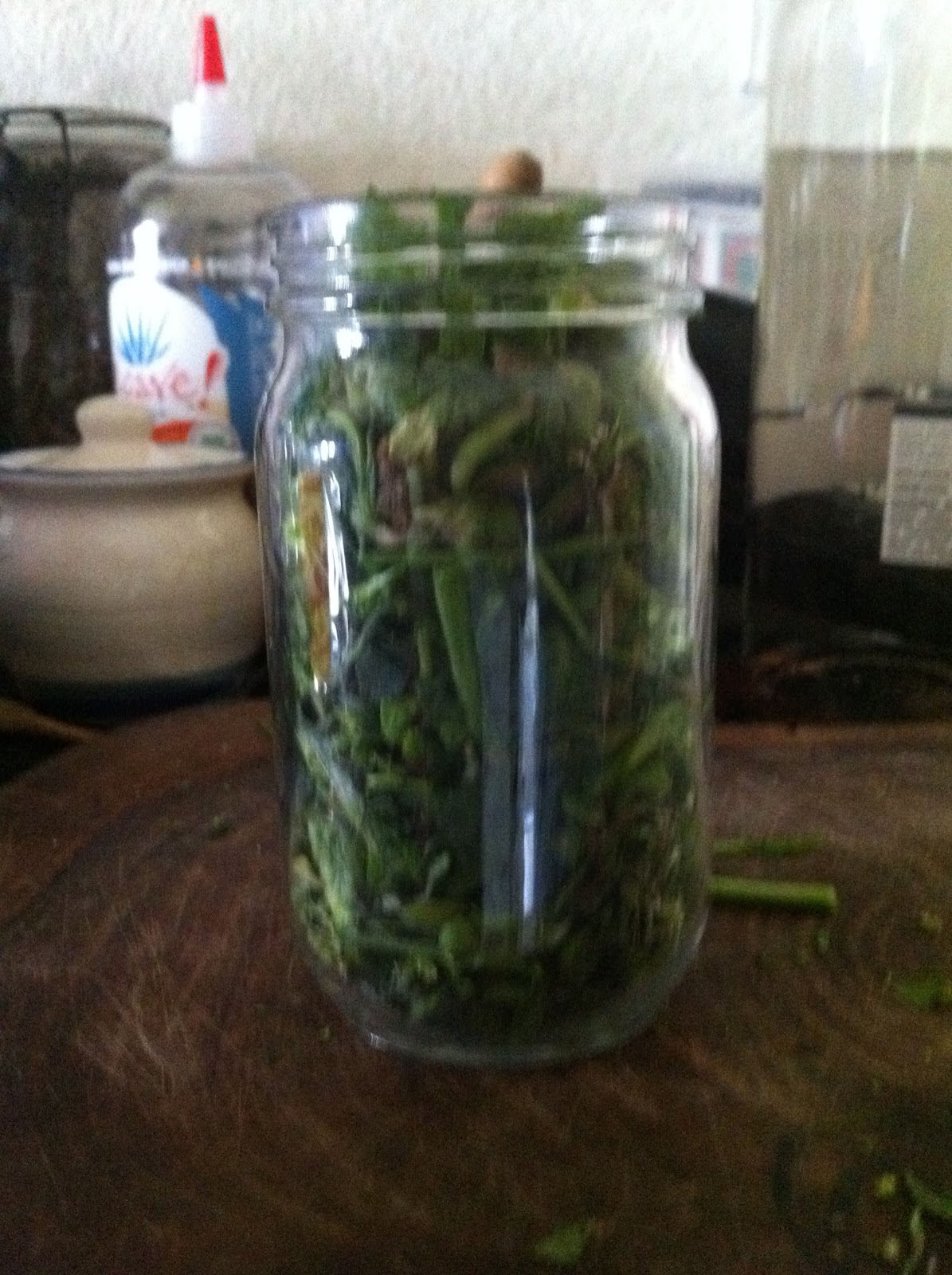
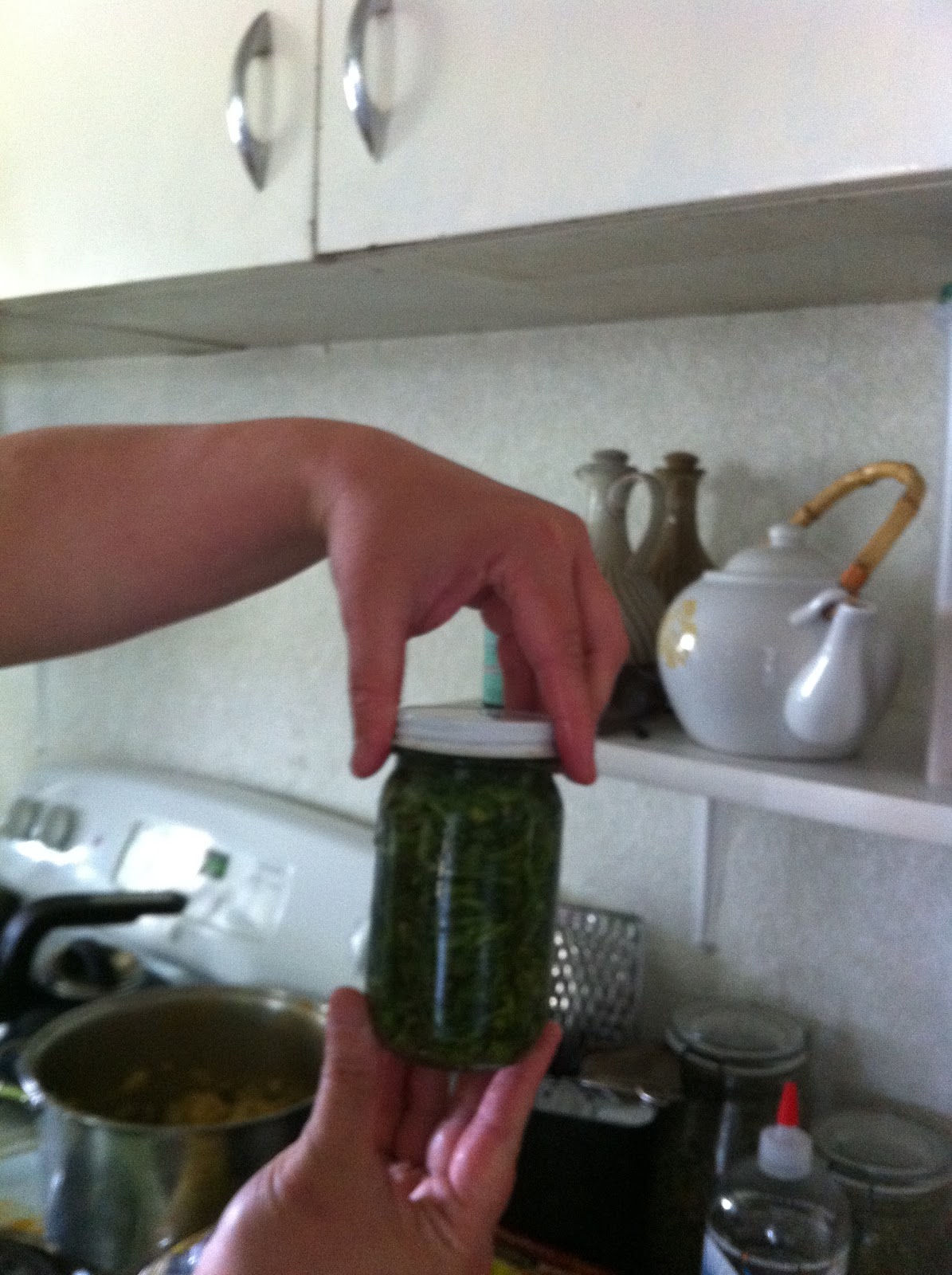
Then pack it into a glass jar:

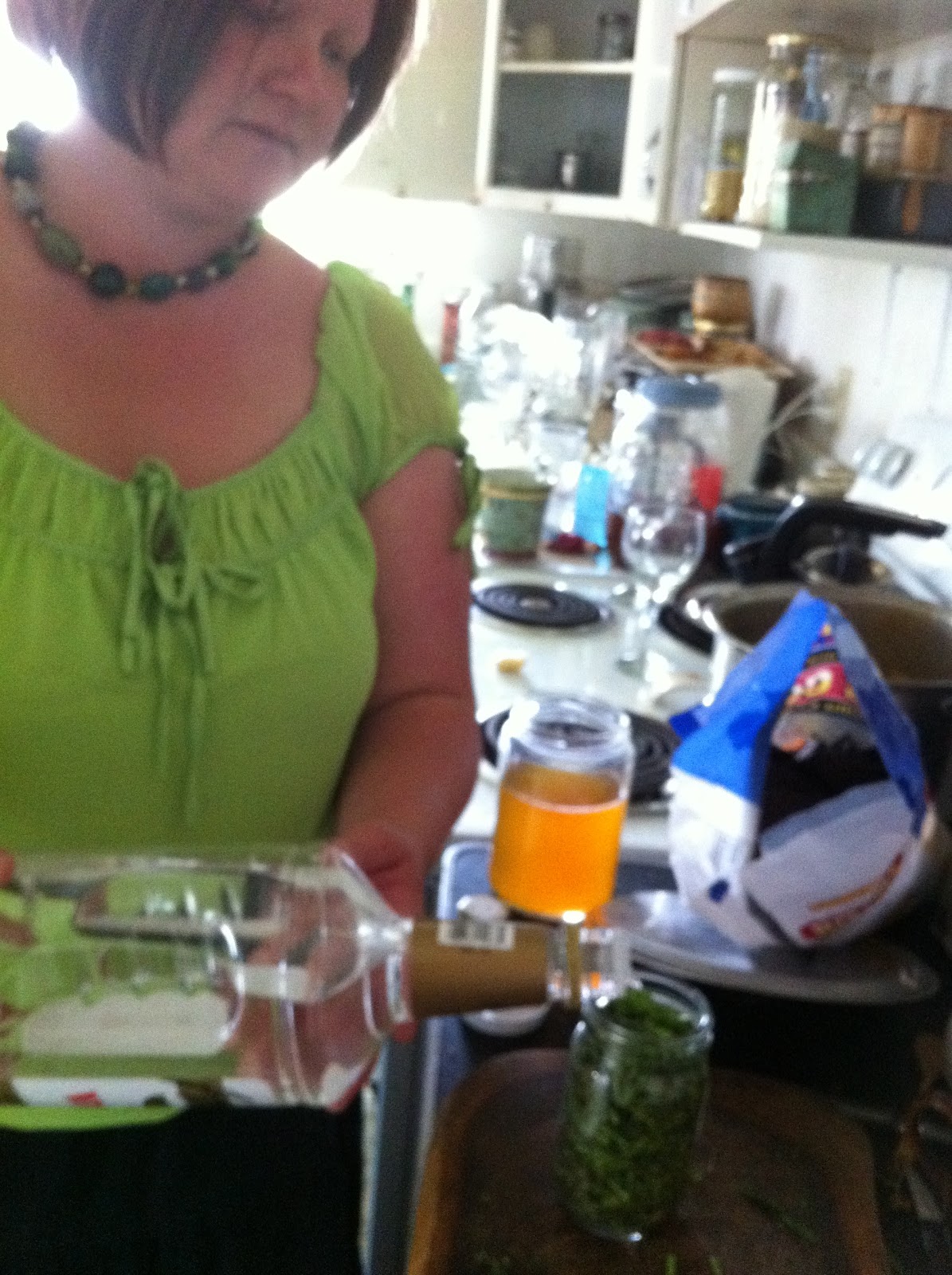
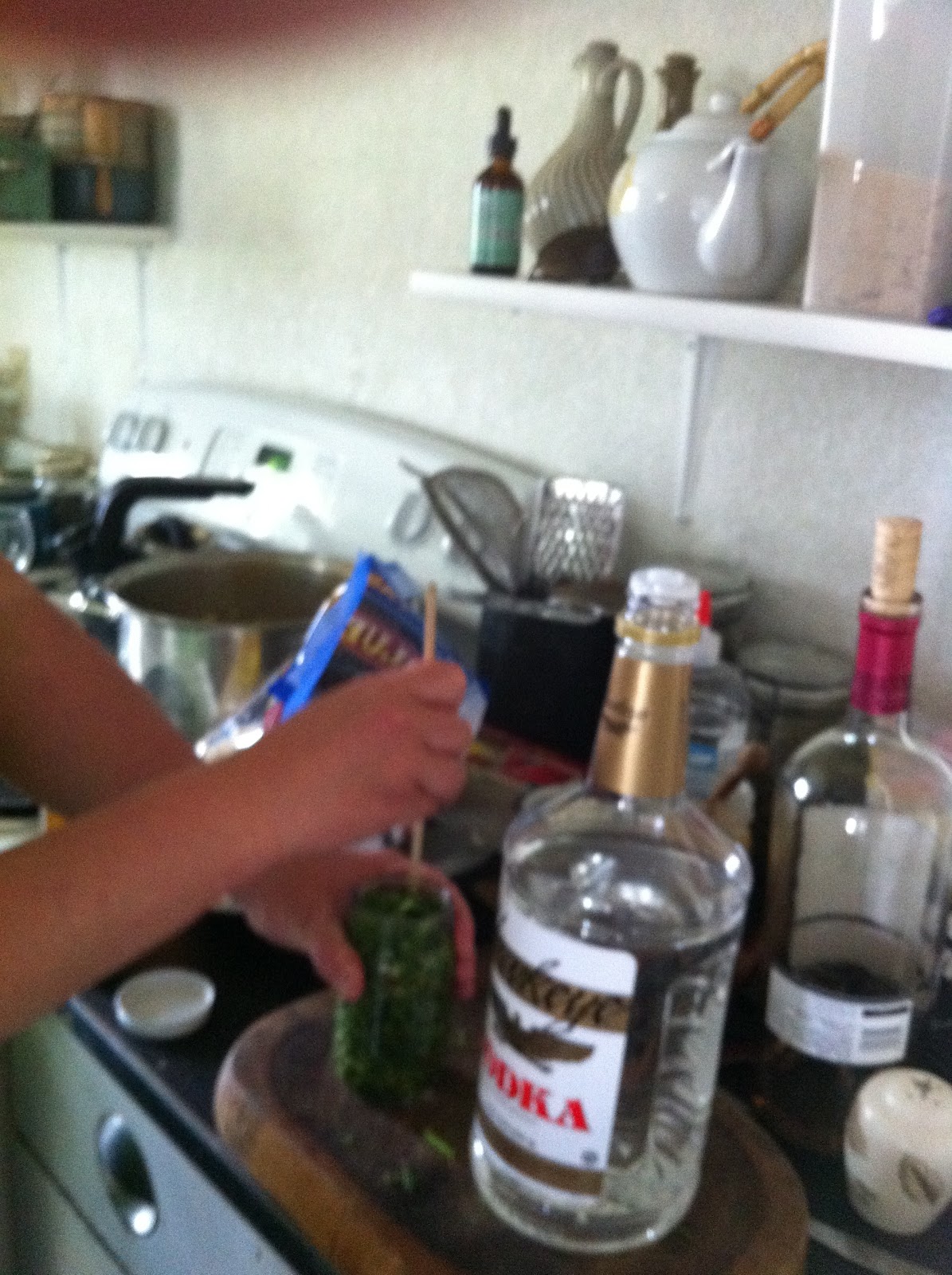
Then fill the jar a second time with vodka. Poke out the air with a chopstick and top off:

   The next day you’ll need to top off again with a little more alcohol. Susun Weed says it’s because the herb fairies like to take a nip. Then seal and date your tincture, and leave in a dark place for six weeks. 
When the six weeks are up you can strain your tincture and pour it into tincture bottles.
Do you use Shepherd’s Purse? What’s your recipe?